SaaS content marketing
How to Measure Whether Your SaaS Content Is Actually Driving Revenue
Zadhid Powell · 5 min read

On this page
Ask most SaaS marketing teams how content is performing and they'll show you a traffic graph. Ask how much revenue it drove and the room goes quiet.
That gap isn't because the content isn't working. It's because most teams are measuring the layer that's easiest to pull from Google Analytics, not the one that answers the actual question.
This isn't a single client story so much as a pattern I've watched repeat: real content investment, real traffic growth, and no clean answer to whether any of it moved a deal.
The fix isn't expensive attribution software. It's tracking a few different things, consistently, starting before you need the answer.
This piece is the measurement half of the SaaS content system: what proves the rest of it is actually working.
Why Traffic and Rankings Aren't Revenue Signals
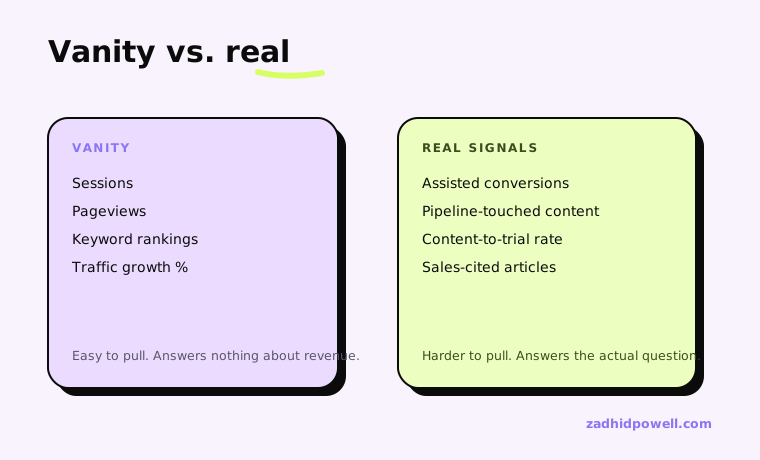
Traffic tells you a page got found. Rankings tell you Google trusts it. Neither one tells you whether a reader became a customer.
A blog can grow traffic every month for a year and never move a single deal, if none of that traffic is reaching the pages a buyer actually needs before deciding.
Gartner's research on the B2B buying journey found buyers complete roughly 80 percent of their purchase process alone, largely through content, before a salesperson ever hears from them.
If you can't see which content did that work, you can't see most of the actual buying journey, only the fraction that happens after someone fills out a form.
What to Actually Track Instead
- Assisted conversions: which content a buyer touched before converting, not just the last page before the form.
- Pipeline-touched content: which posts show up in the history of deals that actually closed, weighted by deal size if you can get it.
- Content-to-trial and content-to-demo rate, by page, not blog-wide. Individual pages perform very differently from each other.
- Sales-cited content: which articles show up in call notes or get sent by reps, because reps forward what actually helps them close.
Pro tip: Ask three salespeople which blog posts they've personally sent to a prospect this quarter. That five-minute conversation will tell you more about what's driving revenue than a quarter of traffic reports.
A Simple Attribution Model Without Enterprise Tooling
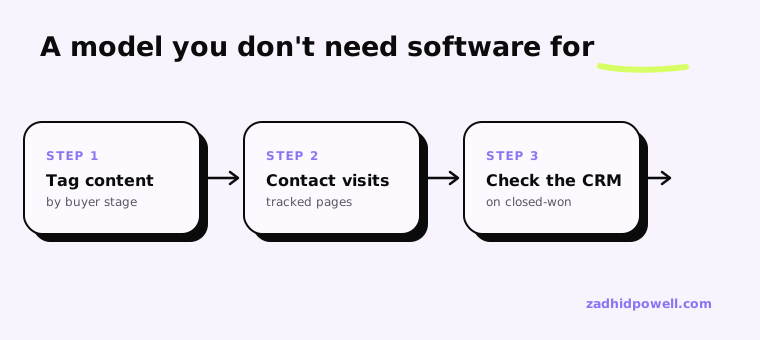
You don't need a full multi-touch attribution platform to start seeing the picture. You need one consistent way to tag content by funnel stage and check it against your CRM.
Tag every piece by the buyer stage it's built for: awareness, consideration, or decision. That tag alone lets you ask a much sharper question than "how's the blog doing."
Then pull a simple report from your CRM: for closed-won deals, which pages did that contact visit, in what order, before they became an opportunity. Most CRMs surface this without custom engineering.
It won't be perfect. It doesn't need to be. A rough picture of which content touches revenue beats a precise picture of traffic that never answers the question.
Content Marketing Institute's 2025 B2B research found 58 percent of B2B marketers rate their own content strategy as only moderately effective. Measurement is usually the specific piece that's missing when that rating comes up.
Connecting Content to the Sales Conversation
The clearest signal content is working isn't a dashboard number. It's when a prospect mentions a specific article on a sales call, unprompted.
That single data point is worth chasing deliberately: ask sales to note it whenever it happens, and treat every mention as a real, if informal, attribution signal.
Decision-stage content, comparisons, alternatives, pricing pages, tends to produce this signal far more often than awareness-stage content, because it's the content a buyer actually references while deciding.
G2's 2025 Buyer Behavior Report found two-thirds of B2B buyers now prefer to research on their own before engaging a salesperson at all. Most of that research is invisible to a dashboard that only counts form fills.
This tagging discipline is the same one named at the strategy level as buyer-stage mapping. See the full framework.
None of this measurement matters if the content itself is built for the wrong stage to begin with. Here's the mismatch to check first.
The pages most worth measuring closely are usually comparisons and alternatives. Here's how to build those well.
And none of this works without content built to compound in the first place. Here's that half of the system.
Frequently asked questions
How do you measure content marketing ROI for a SaaS company?
Track assisted conversions and pipeline-touched content, not just traffic and rankings.
Tag every piece by the buyer stage it targets, then check your CRM for which pages closed-won contacts visited before converting.
What's the difference between traffic metrics and revenue metrics for content?
Traffic and rankings measure whether a page got found and whether search engines trust it. Revenue metrics measure whether a reader who found that page eventually became a customer.
A page can succeed completely at the first and fail entirely at the second.
Do you need attribution software to measure content ROI?
No. A consistent buyer-stage tag on every piece, checked against your CRM for which pages closed-won contacts visited, gets you a usable picture without enterprise attribution tooling.
How do sales teams help measure content performance?
Ask reps which articles they personally send to prospects and which ones get mentioned unprompted on calls. That's an informal but real attribution signal a dashboard alone won't surface.
Written by
Zadhid Powell
SaaS content strategist and technical writer. I help software companies turn product knowledge into content that ranks, gets cited by AI, and supports pipeline.
Keep reading
Working on this kind of problem?
If this is relevant to what you are building, let's talk about it.
Get in touch