SaaS content marketing
The SaaS Content System: Turning Blog Posts Into Pipeline
Zadhid Powell · 9 min read

On this page
- Why "Traffic" Isn't the Goal
- The Asset Not Output Framework
- The ShortPixel Proof
- Mapping Content to the Buyer's Stage
- The BOFU Gap Most SaaS Content Teams Have
- Why Ranking Isn't the Same as Converting
- Measuring Content Against Revenue, Not Vanity Metrics
- The Workflow That Ties Strategy to Pipeline
- Common Mistakes That Keep Content From Converting
- Where This Connects to the Rest of Your Content
- Frequently asked questions
Most SaaS content marketing gets judged on the wrong number. Traffic goes up, the board deck looks good, and the CEO still can't say what any of it did for revenue.
I've spent years building content plans for technical and SaaS products, and the traffic-without-revenue problem is the single most common failure I see, more common than bad writing, more common than weak SEO.
I led the content team at ShortPixel, reviewed more than 70 tools and APIs at Geekflare, and write for Kinsta and HubSpot as a technical writer today.
Across all of it, the pattern holds: content that ranks and content that converts get treated like the same job. They aren't, and the gap between them is where most of the wasted budget lives.
This guide is the fix: what "asset not output" actually means, how to map content to the buyer's real stage, why the BOFU pages carry more weight than the awareness ones, and how to measure whether any of it is actually working.
Why "Traffic" Isn't the Goal
Before you build anything, get honest about what you're actually optimizing for: traffic is a proxy metric, not the goal, and proxies drift from the thing they're supposed to represent.
A traffic graph going up feels like progress because it's visible and immediate. Revenue from content takes months to show up and is harder to trace back to a specific post.
So teams optimize for the metric they can see, and traffic becomes the whole scoreboard, even though nobody actually gets paid based on sessions.
Content Marketing Institute's 2025 B2B research found 58 percent of B2B marketers rate their own content strategy as only moderately effective, and nearly half of those cite a lack of clear goals. Traffic isn't a clear goal. Pipeline is.
The fix isn't ignoring traffic. It's refusing to let it stand in for revenue when you're deciding what to build next.
The Asset Not Output Framework
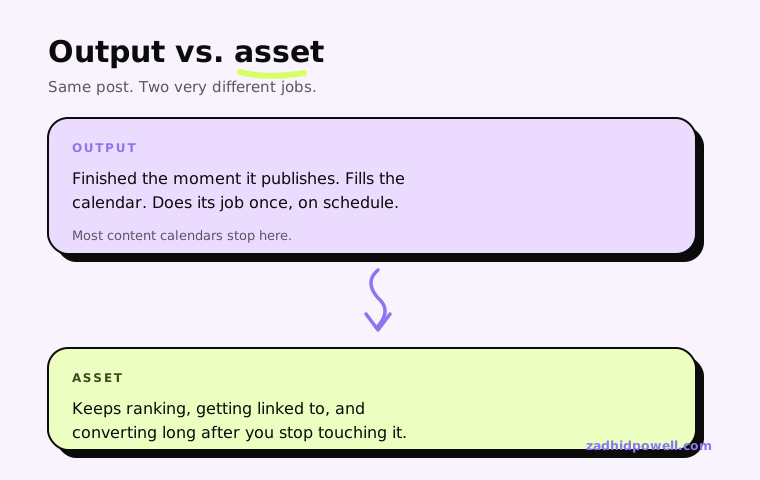
Output is something you finish. An asset is something that keeps paying you back after you've stopped thinking about it.
A blog post is output the moment it publishes. It becomes an asset once it's ranking, getting linked to, sitting inside a keyword map, and converting readers at the stage they're actually in.
Most content calendars are built to produce output on schedule. Almost none are built to produce assets, because that takes architecture, not just a publish button.
This is the framework the rest of this guide runs on. Every section below is one piece of the same discipline: build content that compounds and converts, not content that just ships. The mechanics of building that kind of asset, one cluster at a time, are covered in full here.
The ShortPixel Proof
I took over as head of the content team at ShortPixel after the company had spent time working with an outside content-publishing agency.
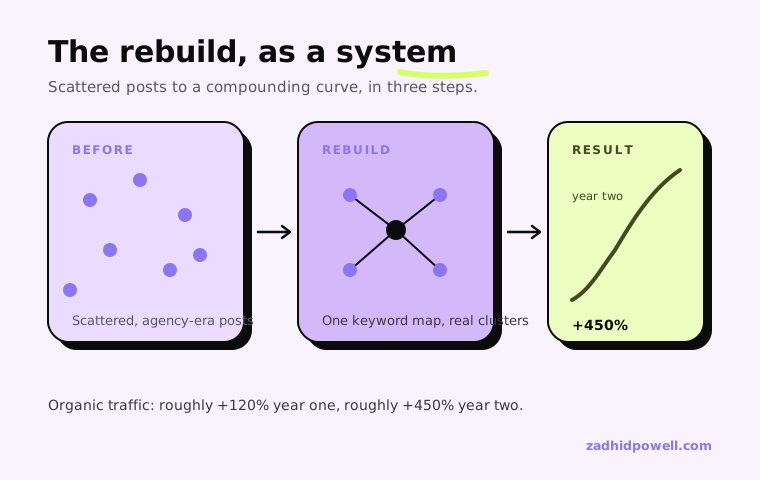
The library I inherited was scattered. Some pieces overlapped, some quietly contradicted each other, and none of it was organized around a coherent keyword map.
I rebuilt the keyword research from scratch, reorganized the entire plan into topic clusters that hadn't existed before, and made sure nothing moved from draft to published without a technical check against the real product.
Organic traffic grew roughly 120 percent in the first year under that structure, and roughly 450 percent by the second.
That number is worth pausing on, because the mechanism behind it applies to pipeline just as much as it applies to traffic. A coherent keyword map and real topic clusters don't just rank better. They also make it obvious which piece of content is supposed to do which job, instead of forty scattered posts guessing at the same reader.
Mapping Content to the Buyer's Stage
Every piece of content has a different job, and treating them all the same is why BOFU pages get built last instead of first.
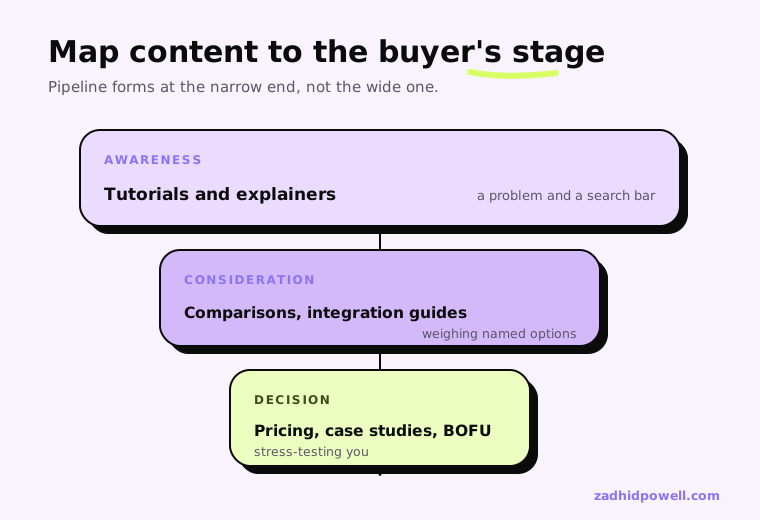
Awareness-stage readers have a problem and a search bar. This is tutorial and explainer territory: how something works, why a problem happens, the conceptual piece that makes a hard thing click.
Consideration-stage readers know the category and are weighing options. Comparison pages, integration guides, and migration content do the work here.
Decision-stage readers are close, and they're stress-testing you: pricing clarity, sharper comparison pages, case studies, and a demo or quickstart that doesn't waste their time.
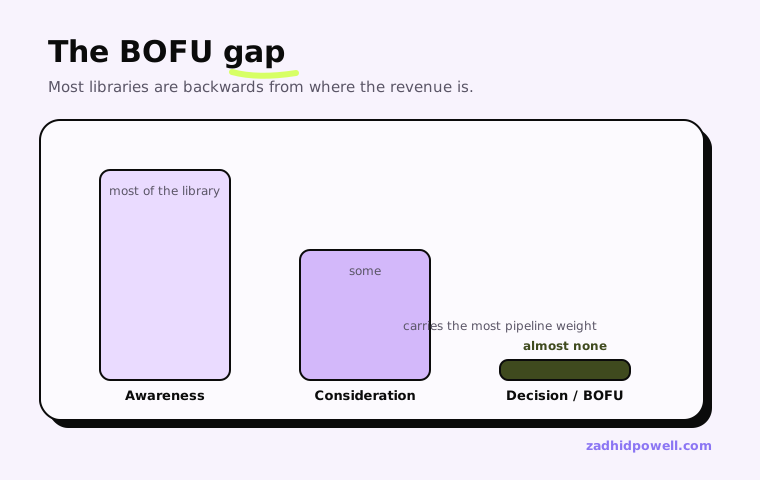
Map every existing piece to one of these three stages before you write anything new. Most content libraries have plenty of awareness content, some consideration content, and almost no decision-stage content, which is backwards from where the revenue actually is.
Pro tip: Pull your last twenty published posts and tag each one awareness, consideration, or decision. If decision-stage is under a fifth of the list, that's the gap costing you pipeline, not the writing quality.
The BOFU Gap Most SaaS Content Teams Have
Decision-stage content is the smallest category most teams publish, and the one that does the most direct work toward revenue.
I spent years writing exactly this kind of content at Geekflare, reviewing more than 70 different APIs and tools for buyers who were actively choosing between named options, not researching a category from scratch.
The comparison and alternative pages that came out of that work converted at a different rate than anything else in a typical content library, because they meet a reader at the exact moment they're deciding.
The specific mechanics of what makes a comparison page convert, honesty, real decision criteria, naming your own weak point, are their own piece. I've written the full breakdown here.
Why Ranking Isn't the Same as Converting
A keyword ranking well tells you Google trusts the page. It tells you nothing about whether the reader who found it was ever going to buy.
The most common failure isn't bad content. It's a stage mismatch: an awareness-stage page ranking for a decision-stage query, or the reverse, so the format never matches what the searcher actually needed.
Google's own guidance on helpful content optimizes for whether a page satisfies the searcher's need, not whether it satisfies a business's revenue goal. Those two things frequently diverge.
This specific failure mode, what it looks like and how to fix it without losing the ranking you've already earned, gets its own piece. Here's the full diagnostic.
Measuring Content Against Revenue, Not Vanity Metrics
None of the above matters if you can't tell whether it's working. Most content teams can answer "is traffic growing." Almost none can answer "did this move a deal."
The fix isn't enterprise attribution software. It's tagging every piece by buyer stage and checking it against your CRM for which pages closed-won contacts actually visited.
Gartner's research on the B2B buying journey found buyers complete roughly 80 percent of their purchase process alone, mostly through content, before a salesperson ever hears from them. Most of that journey is invisible to a dashboard that only counts form fills.
The full measurement model, without needing an attribution platform, is covered in detail here.
The Workflow That Ties Strategy to Pipeline
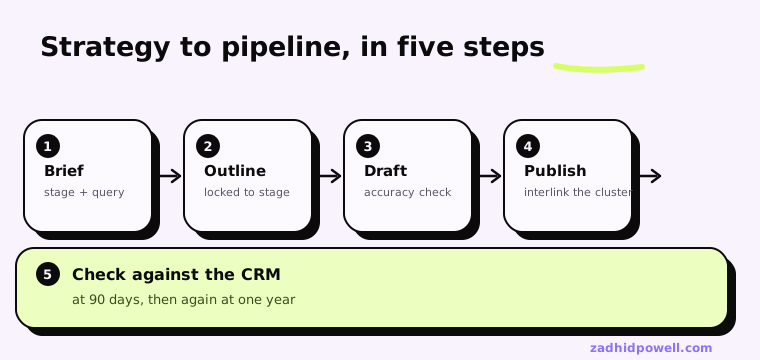
What turns this from a philosophy into a repeatable system is a workflow, not a set of principles everyone nods at once and forgets.
- Brief first. One page: the buyer stage, the target query, the pillar or cluster it belongs to, and the specific pipeline outcome it's supposed to move.
- Outline before draft, locked against the buyer-stage map so the content doesn't drift into the wrong altitude for its own keyword.
- Draft to the brief, with a technical accuracy check before anything counts as done.
- Tag it, publish it, and interlink it into the cluster it belongs to. No orphan posts.
- Check it against the CRM at the 90-day mark, and again at the one-year mark. A piece that isn't compounding by then needs a second look, not abandonment.
Common Mistakes That Keep Content From Converting
- Treating every post as a standalone win instead of a piece of a cluster with a specific job.
- Publishing awareness-stage content at a decision-stage keyword's rate, because it's cheaper and faster to produce.
- Never checking which pages closed-won contacts actually visited, so the highest-traffic post and the highest-converting post are assumed to be the same one.
- Treating a comparison page like a features list instead of the closest thing to a sales conversation most buyers will read.
Each of these is fixable on its own, but they compound the same way a healthy content system compounds. Fix the mapping first. The rest gets easier once every piece has a defined job.
Where This Connects to the Rest of Your Content
A pipeline-focused content system still depends on the same accuracy discipline that earns a technical reader's trust. A comparison page with a wrong technical claim loses a buyer exactly as fast as a tutorial does.
The technical review gate that catches an inaccurate claim before it ships applies here as much as it does anywhere else in your content.
You don't win a buyer's trust by publishing the most. You win it when the right page reaches them at the exact stage they're in, and gives them what they actually need to decide.
If you want this built for you rather than built in-house, this is the exact system behind our SaaS content strategy work.
Keep going: the rest of this series
- Why Your SaaS Content Ranks but Doesn't Convert: the buyer-stage mismatch that explains flat pipeline despite growing traffic.
- Content That Compounds: building blog assets instead of filling a calendar, with the ShortPixel numbers behind it.
- BOFU Content for SaaS: the comparison and alternative pages that actually close deals.
- How to Measure Whether Your SaaS Content Is Actually Driving Revenue: a simple attribution model without enterprise tooling.
Frequently asked questions
What is a SaaS content system?
A content system maps every piece of content to a buyer stage, awareness, consideration, or decision, and a specific pipeline outcome, instead of treating each post as an independent, standalone win.
It's the structure that turns content output into a compounding asset.
What does "asset not output" mean in content marketing?
Output is finished the moment it publishes. An asset keeps paying off after that: ranking, getting linked to, and converting readers at the stage they're actually in. Most content calendars produce output; almost none are built to produce assets.
Why does SaaS content often rank well but fail to drive revenue?
Usually a buyer-stage mismatch: the content's format doesn't match the actual intent behind the keyword it ranks for.
Ranking tells you Google trusts the page. It doesn't tell you whether the reader who found it was ever going to buy.
What is BOFU content and why does it matter for SaaS pipeline?
BOFU, bottom-of-funnel, content, mainly comparison and alternative pages, is what a buyer reads right before deciding.
It converts at a different rate than awareness content because it meets a reader at the exact moment they're choosing between named options.
How do you measure whether content is actually driving revenue?
Tag every piece by buyer stage, then check your CRM for which pages closed-won contacts visited before converting. You don't need enterprise attribution software, just a consistent tagging system and a habit of checking it.
Written by
Zadhid Powell
SaaS content strategist and technical writer. I help software companies turn product knowledge into content that ranks, gets cited by AI, and supports pipeline.
Keep reading
Working on this kind of problem?
If this is relevant to what you are building, let's talk about it.
Get in touch